

How to Practice Effectively at the Driving Range
(Beginner to Improver Guide)
Many golfers spend hours at the driving range without seeing real improvement. Hitting ball after ball can feel productive, but without structure, purpose, and feedback, it often reinforces bad habits rather than fixing them.
This guide explains how to practice effectively at the driving range, whether you’re a complete beginner or an improving golfer looking to lower scores. With a simple structure and the right approach, range sessions can translate directly to better performance on the course.
Why Most Driving Range Practice Doesn’t Work
A common mistake golfers make is treating the driving range like a ball-hitting exercise rather than a practice session. Rapidly firing through a large bucket with no plan usually leads to:
Poor focus and rushed swings
Repeating the same mistakes
No clear feedback on what’s improving
Fatigue rather than progress
Effective practice is intentional, measured, and goal-driven. Quality always beats quantity.
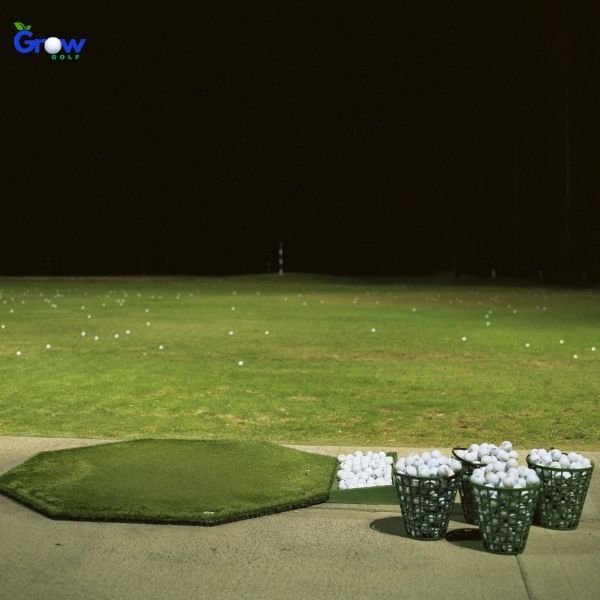
Set a Clear Goal Before You Start
Before hitting your first ball, decide what you want to work on. A single, focused objective makes your practice session far more productive.
Examples of good goals include:
Improving ball contact with irons
Working on alignment and setup
Controlling shot shape or trajectory
Error fixing (slices/hooks/thin/fat shots)
First tee shot practice (if you’re planning a full round in the near future)
Avoid vague goals like “hit the ball better.” The more specific your intention, the easier it is to measure improvement.
Warm Up Properly
Warming up is not about hitting your driver as far as possible. It’s about preparing your body and swing.
A simple warm-up structure:
Start with some simple stretches without the ball
Start with short wedges or half swings
Gradually increase swing length
Move through the bag as rhythm improves
This builds tempo, reduces injury risk, and sets the tone for a focused session. A few bad shots to start your session, just like on a real course can really shape your mindset for the rest of the session. Give yourself the best chance to start positively.
Use Structured Practice, Not Random Hitting
One of the most effective ways to practice at the driving range is to introduce structure into your session.
Try this approach:
Hit groups of 5–10 balls with the same intention
Pause briefly between shots
Make small adjustments if needed
Evaluate results before moving on
This mirrors on-course conditions far better than rapid-fire hitting.

Simulate the Golf Course
Practising as if you’re playing a hole helps bridge the gap between the range and the course.
For example:
Imagine a tee shot, then choose an iron for the “approach”
Change clubs regularly
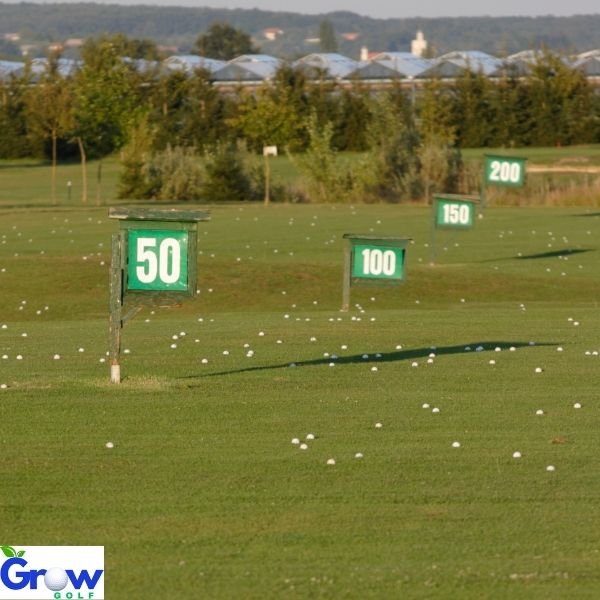
Pick specific targets for each shot
Visualise safe and not safe areas (fairway/green vs rough/water hazards/out of bounds)
This improves decision-making, focus and shot selection.
Focus on Feedback, Not Just Ball Flight
Ball flight matters, but it doesn’t tell the full story. Pay attention to:
Contact quality
Consistency of strike
Start direction
How the swing feels
Be wary of range mats masking fat shots
Improvement often shows up in repeatability before it shows up in distance or accuracy.
When Training Aids Can Help
Training aids can be extremely useful when used correctly. They work best when supporting a specific goal rather and ingraining good fundamentals.
At the driving range, training aids can help with:
Alignment and setup consistency
Grip awareness
Swing path feedback
Strike location on the clubface
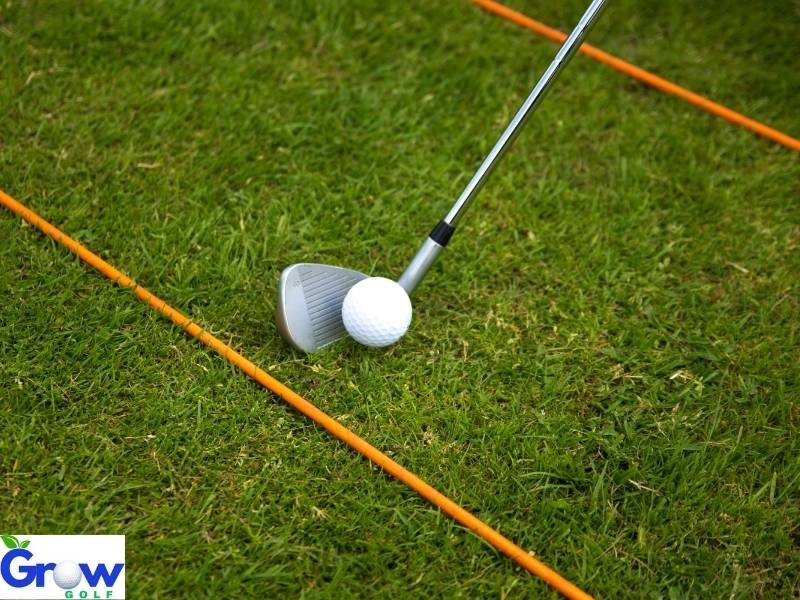
Alignment in particular can often be affected at the range. You could be trying to aim at a specific target but the bay itself and the mat are naturally lined up towards different targets. This misalignment can often cause subtle changes in your setup and therefore create false positives and negatives in results.
If you’re unsure which tools are most effective, see our guide on best training aids to use at the driving range, which covers simple, affordable options suitable for most golfers.
Keep Sessions Short and Consistent
Long practice sessions often lead to diminishing returns. For most golfers, 45–75 minutes is more than enough when practice is focused.
Regular, shorter sessions are far more effective than occasional marathon visits to the range.
Track What You’re Working On
Keeping a simple practice log can dramatically improve progress. Note:
What you worked on
What felt good
What needs improvement next time
This creates continuity between sessions and prevents repeating the same mistakes. Driving ranges with ball tracking technology like Toptracer or Trackman often allow you to sign up to their app where stats from your range sessions are logged, use these to monitor progress and identify areas to improve.
Common Practice Mistakes to Avoid
Hitting too many balls too quickly
Always using the same club
Ignoring alignment and setup
Practising without a goal
Chasing distance instead of control
Avoiding these mistakes alone can significantly improve the effectiveness of your range sessions
Final Thoughts
The driving range is one of the most powerful tools for improving your golf game, but only when used correctly. By setting clear goals, practising with structure, and focusing on quality over quantity, you can turn every session into meaningful progress.
Whether you’re just starting out or looking to refine your game, smarter practice at the range will always outperform simply hitting more balls.
FAQ
How long should a driving range practice session last?
Most golfers benefit from sessions lasting between 45 and 75 minutes. Shorter, focused practice is usually more effective than long sessions where concentration drops.
Is it better to hit lots of balls or practise slowly?
Practising slowly with a clear goal is generally more effective. Taking time between shots helps you focus on setup, alignment and feedback rather than rushing through a bucket of balls.
How often should I practise at the driving range?
For most golfers, one to two structured range sessions per week is enough to see improvement, especially when combined with occasional on-course play. Don’t forget your short game practice either!!
Should beginners practise at the range or play the course?
Both are useful. The driving range is ideal for learning fundamentals and building confidence, while playing on the course helps develop decision-making and real-world shot execution.
Get More From Your Driving Range Practice
Training aids can speed up improvement, but practising at the right facility or with the right guidance makes an even bigger difference. Explore local driving ranges and instructors to get the most out of your practice sessions.
Other Articles you might like

Driving Range Etiquette and Rules Every Golfer Should Know

Practice Effectively at the Driving Range

Best Training Aids to Use at the Driving Range
Driving Range Etiquette and Rules Every Golfer Should Know
Practice Effectively at the Driving Range